
The House Hold of God
The Household of God: Why Every Generation Must Guard the Truth
There is a question that every church in every age must eventually answer, not as a matter of policy or preference, but as a matter of faithfulness. The question is this: will the church be shaped by the voice of the modern age, or will it rather be shaped by the Word of its God?
That question is not new. It is as old as the church itself. And one of the clearest, most urgent answers Scripture gives us comes from a letter written nearly two thousand years ago to a young minister named Timothy, stationed in one of the most spiritually complex cities of the ancient world. The letter is 1 Timothy. And its central idea is as relevant today as it was the moment Paul set it to parchment.
God's church must be ordered by God's truth.
A City Full of Competing Claims
To understand why that statement carries such weight, you have to understand Ephesus. This was not a quiet, sleepy town. It was one of the greatest cities in the Roman province of Asia, prosperous, influential, and deeply pagan. The city's identity was wrapped around the worship of the goddess Artemis, whose massive temple dominated the skyline and whose cult shaped the economy, the culture, and the social fabric of the entire region.
Into that city came the gospel. And the results were extraordinary. Acts 19 records what happened when the Word of God truly took hold of people in Ephesus. Those who had practiced magic brought their books together and burned them publicly. The value of those books was counted at fifty thousand pieces of silver. The gospel was not merely giving people a private religious experience. It was turning lives upside down. It was changing what people loved, what they practiced, and what they were willing to give up.
That is what God's truth does. It does not simply add information. It transforms loyalty.
Strong Beginnings Do Not Guarantee Faithful Futures
Paul poured himself into the Ephesian church for three years. Acts 20 tells us he did not cease, night and day, to admonish each one with tears. These were not strangers to him. He knew their leaders. He had wept with them. He had invested years of his life into them.
And yet, before he ever left, he warned them. Gathered with the Ephesian elders at Miletus, he looked these men in the eye and told them that danger was coming. Savage wolves would come from outside. But more sobering still, men would arise from within the church itself, speaking distorted things, drawing disciples away after them. His command to them was urgent: be on guard.
This is one of the most important lessons the Ephesian story teaches us. A church can have a remarkable beginning. It can have years of sound teaching, faithful ministry, and genuine gospel fruit behind it. And it can still drift. Yesterday's faithfulness cannot substitute for today's obedience. Strong history does not guarantee a faithful future.
Every generation must take hold of the truth for itself. And every generation must faithfully hand it to the one coming behind.
A Man Entrusted With a Difficult Assignment
When the warnings Paul gave the Ephesian elders became reality, he did not send a polished celebrity. He sent Timothy, a man who had walked with him, learned from him, and proven himself faithful over years of difficult ministry. Timothy was not a naturally overpowering personality. Scripture gives us glimpses of a man who faced physical weakness, who sometimes needed encouragement, who could be intimidated by the magnitude of what was asked of him.
And that is exactly the point. God has never required His servants to be impressive. He has required them to be faithful. Timothy was trusted not because of his platform or his personality, but because he knew the truth, he loved the gospel, and he could be counted on with the deposit entrusted to him.
That same principle applies to every believer. You may feel inadequate to speak truth to your friends, to disciple your children, to stand for Christ in your workplace. The question is never whether you feel impressive enough. The question is whether you will be faithful with what God has placed in front of you, faithful with what you already know, obedient to what God has already made clear.
The Pillar and Support of Truth
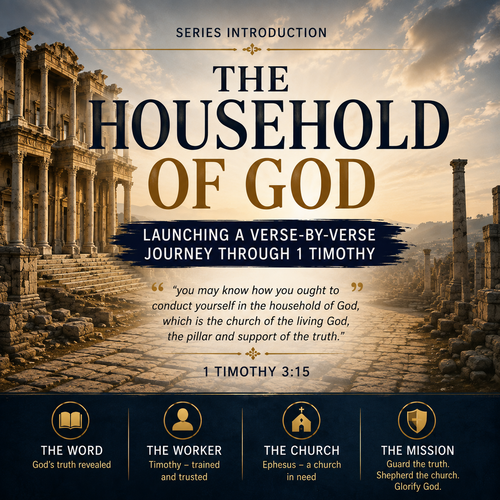
Nearly halfway through the letter, Paul pauses and tells Timothy exactly why he is writing. The passage is 1 Timothy 3:14-15, and it functions as a window into the entire book. Paul writes that he wants Timothy to know how one ought to conduct himself in the household of God, which is the church of the living God, the pillar and support of truth.
Three things rise from that statement that deserve careful attention.
First, the church is the household of God. That means it belongs to Him. The owner determines the order of the house. Our preferences, our traditions, our cultural sensibilities must all bow before the Word of the One whose house this is.
Second, the church belongs to the living God. In a city whose entire identity was built around a goddess who could not speak, could not act, and could not save, Paul points Timothy to the God who is alive. That contrast is not incidental. It is everything.
Third, the church is the pillar and support of truth. Notice what Paul does not say. He does not say the church creates truth or improves it or adjusts it for the sake of cultural acceptance. The church receives truth, holds it up, protects it, and proclaims it. That is the assignment.
A Question Worth Settling
The pressure changes with every generation. The idols get new names. False teaching arrives through different channels, podcasts, books, social media, and the quiet drift of simply wanting Scripture to say something more comfortable than what it actually says. But the responsibility does not change.
At the center of the truth the church is called to guard is the person and work of Jesus Christ. He came into the world to save sinners. There is one God, one mediator between God and man, the man Christ Jesus, who gave Himself as a ransom. That is the treasure. That is what must not be lost, distorted, hidden, or replaced.
So the question worth settling is a personal one. Will you let Scripture correct you when it confronts something you believe? Will you value truth enough to learn it, humble enough to obey it, and love others enough to speak it faithfully? A church that guards the truth is made up of people who live under that truth, one household, under one God, ordered by one Word.
There is a question that every church in every age must eventually answer, not as a matter of policy or preference, but as a matter of faithfulness. The question is this: will the church be shaped by the voice of the modern age, or will it rather be shaped by the Word of its God?
That question is not new. It is as old as the church itself. And one of the clearest, most urgent answers Scripture gives us comes from a letter written nearly two thousand years ago to a young minister named Timothy, stationed in one of the most spiritually complex cities of the ancient world. The letter is 1 Timothy. And its central idea is as relevant today as it was the moment Paul set it to parchment.
God's church must be ordered by God's truth.
A City Full of Competing Claims
To understand why that statement carries such weight, you have to understand Ephesus. This was not a quiet, sleepy town. It was one of the greatest cities in the Roman province of Asia, prosperous, influential, and deeply pagan. The city's identity was wrapped around the worship of the goddess Artemis, whose massive temple dominated the skyline and whose cult shaped the economy, the culture, and the social fabric of the entire region.
Into that city came the gospel. And the results were extraordinary. Acts 19 records what happened when the Word of God truly took hold of people in Ephesus. Those who had practiced magic brought their books together and burned them publicly. The value of those books was counted at fifty thousand pieces of silver. The gospel was not merely giving people a private religious experience. It was turning lives upside down. It was changing what people loved, what they practiced, and what they were willing to give up.
That is what God's truth does. It does not simply add information. It transforms loyalty.
Strong Beginnings Do Not Guarantee Faithful Futures
Paul poured himself into the Ephesian church for three years. Acts 20 tells us he did not cease, night and day, to admonish each one with tears. These were not strangers to him. He knew their leaders. He had wept with them. He had invested years of his life into them.
And yet, before he ever left, he warned them. Gathered with the Ephesian elders at Miletus, he looked these men in the eye and told them that danger was coming. Savage wolves would come from outside. But more sobering still, men would arise from within the church itself, speaking distorted things, drawing disciples away after them. His command to them was urgent: be on guard.
This is one of the most important lessons the Ephesian story teaches us. A church can have a remarkable beginning. It can have years of sound teaching, faithful ministry, and genuine gospel fruit behind it. And it can still drift. Yesterday's faithfulness cannot substitute for today's obedience. Strong history does not guarantee a faithful future.
Every generation must take hold of the truth for itself. And every generation must faithfully hand it to the one coming behind.
A Man Entrusted With a Difficult Assignment
When the warnings Paul gave the Ephesian elders became reality, he did not send a polished celebrity. He sent Timothy, a man who had walked with him, learned from him, and proven himself faithful over years of difficult ministry. Timothy was not a naturally overpowering personality. Scripture gives us glimpses of a man who faced physical weakness, who sometimes needed encouragement, who could be intimidated by the magnitude of what was asked of him.
And that is exactly the point. God has never required His servants to be impressive. He has required them to be faithful. Timothy was trusted not because of his platform or his personality, but because he knew the truth, he loved the gospel, and he could be counted on with the deposit entrusted to him.
That same principle applies to every believer. You may feel inadequate to speak truth to your friends, to disciple your children, to stand for Christ in your workplace. The question is never whether you feel impressive enough. The question is whether you will be faithful with what God has placed in front of you, faithful with what you already know, obedient to what God has already made clear.
The Pillar and Support of Truth
Nearly halfway through the letter, Paul pauses and tells Timothy exactly why he is writing. The passage is 1 Timothy 3:14-15, and it functions as a window into the entire book. Paul writes that he wants Timothy to know how one ought to conduct himself in the household of God, which is the church of the living God, the pillar and support of truth.
Three things rise from that statement that deserve careful attention.
First, the church is the household of God. That means it belongs to Him. The owner determines the order of the house. Our preferences, our traditions, our cultural sensibilities must all bow before the Word of the One whose house this is.
Second, the church belongs to the living God. In a city whose entire identity was built around a goddess who could not speak, could not act, and could not save, Paul points Timothy to the God who is alive. That contrast is not incidental. It is everything.
Third, the church is the pillar and support of truth. Notice what Paul does not say. He does not say the church creates truth or improves it or adjusts it for the sake of cultural acceptance. The church receives truth, holds it up, protects it, and proclaims it. That is the assignment.
A Question Worth Settling
The pressure changes with every generation. The idols get new names. False teaching arrives through different channels, podcasts, books, social media, and the quiet drift of simply wanting Scripture to say something more comfortable than what it actually says. But the responsibility does not change.
At the center of the truth the church is called to guard is the person and work of Jesus Christ. He came into the world to save sinners. There is one God, one mediator between God and man, the man Christ Jesus, who gave Himself as a ransom. That is the treasure. That is what must not be lost, distorted, hidden, or replaced.
So the question worth settling is a personal one. Will you let Scripture correct you when it confronts something you believe? Will you value truth enough to learn it, humble enough to obey it, and love others enough to speak it faithfully? A church that guards the truth is made up of people who live under that truth, one household, under one God, ordered by one Word.
Recent
Archive
Categories
no categories
No Comments